Aug 24 2009

A Day In The Life Of An Internet Entrepreneur 2009 Edition

Back in August of 2005 I wrote an article that outlined what a typical day in my life was like. I linked to the post in my about page as I see it as a subject people are very interested in – what’s it like to live each day when you make money from the Internet?

You can read the original article here – A Day in the Life of an Internet Entrepreneur (August 2005)

I wrote that article after just over half a year of blogging and it represented what my life was like at the time. Now, four years later, things have changed and it’s time to update what a typical day in my life is like in August of 2009.

My Business Is Different

At the time I wrote the original day in the life piece, my main business and income source was BetterEdit.com, a proofreading service I started and built up over several years.

One of the major roles I performed to maintain the business was controlling the email communication system, connecting each proofreading project with an editor and providing customer support. This role was literally the main “work” in my life back then, taking several hours per day on average.

I eliminated the email management role when I hired an assistant, my good friend Angela, who to this day is still in charge of the day-to-day operations of BetterEdit and is also admin manager for my current business too. If you’ve ever sent me an email, chances are you have communicated with her.

I still have to deal with email of course, but the time pressure is no longer there and I only deal with emails that are about things only I can deal with. About 80% of my email is filtered away by Angela, meaning I never see it. She either responds with the appropriate template we have set up, or answers using her knowledge of my business and her supreme customer service skills.

If you want to know more about the systems we use to handle customer service, you can read the articles here

In 2007 I sold BetterEdit, leaving me to focus just on my blogging and information publishing enterprises. I also sold off all my non-blogging related websites, narrowing my focus to the aspects of my business I really wanted to grow.

I Don’t Do The Same Things Anymore

Read the rest of this entry >>

Mar 11 2009

How To Work Less and Earn More By Leveraging The Synergy Between People And Technology

Synergy Between People and TechnologySeveral years ago when I was managing BetterEdit, my proofreading company that I sold in 2007, I was knee deep learning from Rich Schefren, taking his Business Growth System course.

Rich launched that program on the back of his most successful report to date, the Internet Business Manifesto, which featured the now famous flow chart of what an Internet entrepreneur is supposed to do if he or she wants to succeed online. If you haven’t read the Manifesto, I strongly recommend you do so as soon as possible, it’s still one of the most crucial reports on Internet marketing as an entrepreneur ever written.

After reading the Manifesto it was clear I needed to make some changes, so I joined Rich’s coaching program and began going through it. The premise of what Rich teaches is the idea that no person can realistically ever get to the point where their business looks after them, rather than they look after their business, if you do everything by yourself. Rich took this idea a lot further than just outsourcing, and sees business as a machine that can be completely automated.

At that point in time BetterEdit was doing well and I did have Angela, my admin/customer service person looking after most of the day to day emailing for the business, which is the main workload to keep it going. This was great, but as a result of thinking so much about automation and studying Rich’s course, I was interested in possibly using technology to further systematize the operations and gain more leverage.

Using Software To Automate

BetterEdit has a very simple job flow process. A client submits a paper and makes payment, the admin person assigns the job and forwards the document to an editor. The editor completes the job and returns to the document to both the admin and the client. Various emails flow back and forth if there are problems, but generally that’s the basic process.

One of the key weaknesses of the system I had was no affiliate program. I saw huge potential if I could find a way to pay a commission out to websites that referred jobs to the business. Besides manually tracking things, which would be a nightmare, I just couldn’t do it.

The answer to the affiliate issue was to create some kind of software that would handle the job process, including payments, so we could automatically track affiliate referrals and credit commissions for jobs completed.

I had to be careful because between paying editors and admin, the margin on jobs wasn’t massive. This wasn’t like an information product where I could pay out 50% commissions, I’d have to be careful. This was another reason where I saw software as a help as it could reduce the amount of work admin did, meaning I could incentivize affiliates with a higher commission.

With a software system in place, including an affiliate program, I could get out there and recruit an army of websites to refer customers to my business. I liked this idea because by then I was getting pretty tired of heading out to campuses to put up posters to promote the service, although I was starting to outsource this job too (my mind was constantly thinking about how I could work less without reducing my income).

Realizing Your Concept Can Be Tough

It was clear that software could be the automation answer, so I scheduled a meeting with a local development firm and sat down with them to talk about my plan.

Read the rest of this entry >>

Apr 8 2008

Free Report – How To Start An Internet Business

We’ve almost nutted out the bugs with the new design and I must say I’m very happy with how everything looks. I’ll talk more about the design process (and reveal who did my blog design) in a later post, now I want to tell you about a little free report I’m giving away to my RSS subscribers as part of the new blog design launch.

My First E-Book (unreleased until now)

How to start an Internet business free report by Yaro StarakSeveral years ago around early 2006 I had just begun blogging seriously and had spent the previous six months pumping out some of my early pillar articles.

At this time my proofreading business BetterEdit was my main focus (I sold it in 2007) and I was not a professional blogger. I don’t think I was making much, if anything from my blog yet, but my other business was doing well and I made a good living from it.

Those who have read this blog from the beginning might remember back during the early days I talked a lot more about entrepreneurship, setting up a business and general passive income strategies – and not so much about blogging (though I was starting to write about it even then).

It was around that time I decided to write my first e-book. I had no idea what I would do with it, but I felt with the several years experience running a few different businesses and I had enough content to produce a short book.

How to Start an Internet Business by Yaro Starak

Over the course of a couple of months I wrote a 50 page report detailing some of the key lessons I learned about starting and running my business and what I felt were the foundation principles necessary that all entrepreneurs understood and practiced.

The end result was a book I titled “How To Start An Internet Business…and stay happy doing it“.

For the new release today, I decided to change the tile to something a little more appealing to most people’s desires -

How To Start An Internet Business…and make your first $1,000 online“.

The book is not about basic tutorials on the practical aspects like setting up websites, choosing domain names, etc. It talks more about mindset and business strategy, although I include 12 steps necessary to start an online business at the end which are quite practical.

The book is a companion to this blog. You can read it and gain a grasp of what you need to do and how you should think when starting your Internet business, and then use the content from within this blog to find information on the finer details about Internet marketing.

Create A Passive Income Business

Read the rest of this entry >>

Sep 14 2007

What Can Kangaroo Stir Fry Teach You About Running A Business?

I’m not sure this will teach you a whole lot about Internet business but hey, you get to see what I had for lunch. Give a guy a camera and this is what happens…

Sep 25 2006

8 Pitfalls To Avoid When Starting An Internet Business

Business PitfallsI’ve been thinking lately about starting another Internet business. I’m not actually going to (right now), but I was considering my future and also what I might do hypothetically if today I decided to dedicate myself to a new project.

Over the past years of running an Internet business and studying information marketing and strategic business development I’ve come to realize there are some important things I would not do again – some pitfalls I would avoid right from the get go if possible. I suggest if you are just about to start your own Internet business or are at the early stages of developing your plan, that you heed my advice and avoid these Internet business pitfalls.

1. Don’t start a business teaching how to make money online.

This is the number one rule. Unless you are currently making millions online using innovative techniques and you have plenty of built up credibility and contacts to leverage for testimonials and endorsements, you won’t succeed teaching how to make money online. There are too many Internet marketing gurus already and the marketplace is saturated. The only way to differentiate yourself is through personality and social proof, and only well established marketers who already have had Internet business success stand a chance.

I’m not saying it’s not possible to be the next Internet marketing guru, but if you do decide to chase that goal you are facing stiff competition and a very jaded consumer. It’s won’t be easy to prove that you are different or any better than the other thousands out there proclaiming to have the next guaranteed formula for success online.

The same goes for bloggers too – don’t try and teach how to make money blogging unless you already make good money from it and can teach something new and different from the many other bloggers out there teaching how to make money from blogging. Earning your first $100 AdSense cheque does not qualify you as an expert. Sure you no doubt have some value to contribute, but if you want to base your business around your skill you better be really good at it or at least be very honest with what you are proclaiming to be or to offer.

2. Choose non-Internet related niches

This is not a hard rule but you will definitely make your life easier if you choose a niche that isn’t Internet related. Like point one, if people already do it online chances are the market is saturated. The markets that have untapped potential are those were the existing offline successful businesses don’t leverage the web…yet…or the opportunity lies in taking an offline business model and enhancing it by using the web as a distribution method or marketing channel.

If you come across a high-demand offline business model that has yet to be marketed online you can jump in and be first to market and establish yourself as the online expert. The best part – your prospects won’t have already been bombarded by online marketing techniques so even the most basic marketing efforts will likely result in tremendous rewards simply because you are first in to a virgin marketplace. These markets are not jaded from over exposure to Internet marketing so you don’t face as much sceptical resistance.

Of course if you do pick non-Internet related niches there better be a reason you can succeed at it. You need to be leveraging your strengths and for some of us (me included) it’s often difficult to find strengths that are not Internet related. Which leads me to point three…

3. Don’t focus on making money

In the past I’ve confused the enjoyment gained from building a business with the rush of making money. If the only thing you look forward to about your business is the money you will make or currently earn, it won’t last. It won’t last because you will only succeed until a better competitor enters the market and takes your money away (and takes your enjoyment as a result) or your business won’t grow because you are not actually leveraging anything you are good at. Making money is not a skill – it’s an outcome as a result of a skill.

You must base your business on two factors – market potential (a hungry consumer) and your strengths. If you don’t do this you will fail, or at best be mediocre.

4. Don’t enter a tiny market

One major pitfall is finding a hungry market but then realizing it’s tiny. There is nothing worse than fighting with competitors for the small handful of customers available. You can try and stick it out and hope you will be the last business standing or be bought out by one of your competitors (or the other way round) but this is not the best premise to be in business for. Be wary of fooling yourself that the market will grow and your business will grow along with it. That might happen, but don’t struggle for too long living for tomorrow’s growth potential if it’s not really there.

5. Watch out for tiny margins

Equally dangerous as a tiny market are tiny margins. If you study pricing and market differentiation you will learn all about premium pricing and discount volume pricing. I’ve discussed pricing and perception points before and no doubt your pricing structure will be one of the most difficult areas to formulate as you go into business. It’s a sticking point for me that I tend to develop and change over time, as hazardous as that may be (see this article for my pricing story).

The one pitfall you have to watch out for is basing a business on a margin that is tight or misunderstood. Ultimately you don’t know how much a margin you can make until you start selling something, so don’t plan too heavily upon making a specific margin, plan for variations. Long term efficiencies and changes to your market positioning can help increase your margins, but there are no guarantees. Early on be especially wary of margins as you will have an inclination to blow a lot of money on marketing and if you marketing costs outweigh your margins, and you can’t sustain your business growth without the marketing, you don’t have a formula for success. Creative marketing can help you through this of course, but just make sure the numbers eventually go to positive given a spread of potential margins (standard deviation anyone? – I can’t believe I’m thinking of my old business statistics class – I hated that subject).

6. Look for leverage points

If you want big time success and explosive business growth you need to find points of leverage. You won’t be successful on any grand scale without leverage because your output will be limited to how much you can do yourself.

Leverage can be a way of using the marketplace to magnify the size of your business (for example many to many business models or user generated content) or through joint ventures or host beneficiary relationships. Leverage is about thinking beyond a solo-mentality and finding ways to use other resources to meet your goals quickly.

Although not strictly leverage by definition, just the act of taking on outsourcers or employees to increase your output is a great start and is the path to a leverage mentality, which leads me to point seven…

7. Avoid self-employment thinking

Most people who leave a day job to start a business begin with a self-employment model. This means you create a job for yourself and add all the other responsibilities that come with business ownership, and lose the benefits that come from employment at a company (remember this article? – Do You Want to Run Your Own Business?). This is fine as a starting point (although you can avoid it from day one) but you must learn to start thinking about business building, which means separating yourself from roles that don’t build your business.

The biggest culprit to blame for self employment thinking is cash flow, or lack of it, since most new businesses have limited financial resources and as such the owner must do everything since they can’t afford to bring in other people. It’s important when deciding what business to start that you see how it is possible for you to stop doing the day-to-day business fulfillment roles (delivery of services/products, support, sales, etc) in the future. If you can’t automate, outsource, or hire people to do these roles, then you don’t have a business model, you have a job model.

8. Be aware of your own limitations

As sad as it might sound, most of us are only truly good at a few things. We can be sufficient at many things, but generally each of us only have a few gifts that can translate into business success. Before starting a business make sure you know what your talents are and how they translate into skills you can use to build a business.

Most of the things I do every day to manage my business leverage skills I have that I would call sufficient. I’m not great at them but I can spend some time and get the job done. This includes things like writing copy, technical jobs like server management, software installation and basic graphic design. Then there are other jobs I do that are routine, areas where you really can’t excel at, they just need to be done and I have to do it.

All of these activities take me away from what I should be doing – leveraging my time on the high value activities that use my talents – things like writing this article now. It’s taken me a while to realize that an important goal in my business is to set up systems and people to do the things that for me are largely a waste of time. These activities are important still – my business wouldn’t succeed without them being completed – but they don’t leverage my talents and I need to have people with talents in those areas handle them.

Don’t worry if right now you are not sure what your talents are but be aware that your goal eventually is to distinguish what you are exceptionally good at and stop doing what you are not good at. Don’t fool yourself into thinking you are the best at everything because A) it’s not true and B) this will lead to solo-minded thinking, which I’ve already mentioned will stifle your business growth.

Yaro Starak
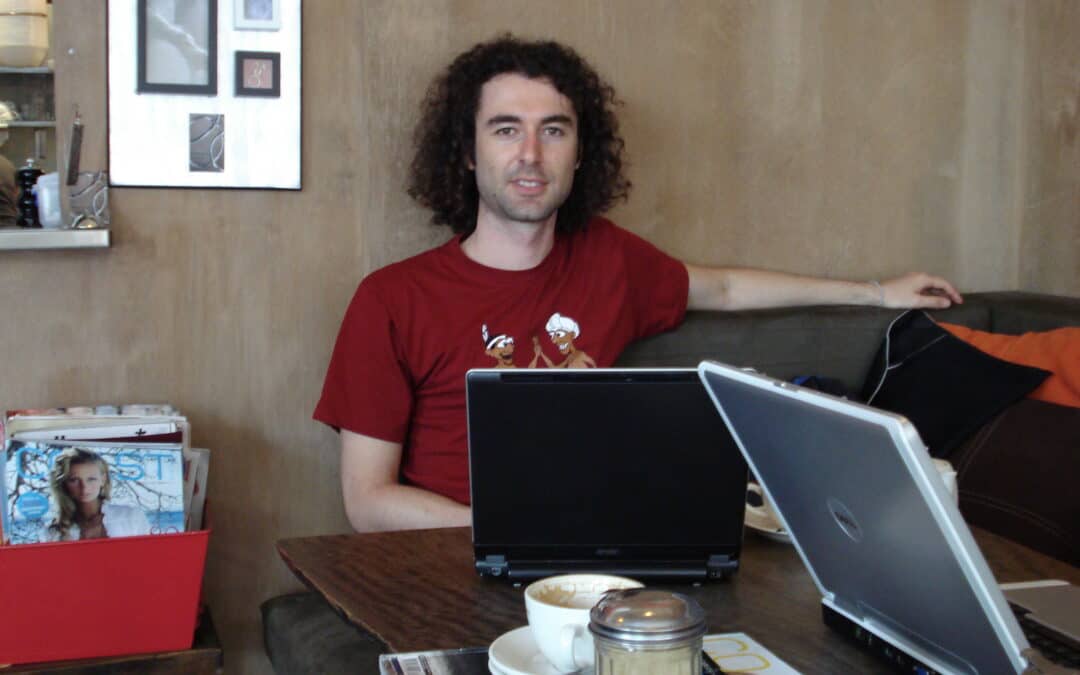
Leveraging Coffee Shops

RSS
Subscribe To Entrepreneur's Journey
  • TwitterCounter for @yarostarak

Subscribe to my blog and get a bonus copy of my book - "How To Start An Internet Business & Make Your First $1,000 Online"

Blog Sponsors
Global Resorts MastermindWordpress eStoreHuman RewriterBlog ApperAdvertise Space30 Day MarketingOur Internet SecretsHow To Sell Your eBook
Follow Yaro on Twitter
Recent Video Post

Make sure you look out for Laura’s cat – she features in this interview too.
Click here to download the audio-only MP3 [ 54 MB ]
This interview is a great story, which for many online entrepreneurs will seem very familiar – as it was for me.
Laura is young, but she’s not young in terms of how [...]

Recent Flickr Photos
Blog Sponsors
Link Wheeler
Recent Comments
  • Tyrone Shum: Hey Yaro, Awesome post and so true. Your branding is so important and what you have said - the more of you out there,...
  • Ron: Basically, this is a good tip and a good guide for me. A pretty long post so I have decided to print it out for further ...
  • John Hutchison: Great Post! Its interesting that you mention the product life cycle and its clear that what ever niche market you c...
  • Yaro: You've pretty much got it, in a basic sense. Each launch has had new elements, such as new launch content (for example I...
  • Yaro: Hey Tyler, as I stated towards the end of the article, the system I have used is 2 launches with the program opening and...
Recent Podcasts
Learn how to make money from blogging

Learn how this blog makes $10,000 per month, attracts over 5,000 daily readers - All from just two hours of "work" per day!

Subscribe Form

Your information will not be shared with any third party.