The Secret Tactic Of The Worlds Best Marketers: Become Obsessed
I have a confession to make – I’m obsessed.
With what I hear you ask?
With cars.
I’ve officially become one of those men I never previously understood. Why devote so much of your brain space to knowing the ins and outs of every car ever made? Surely there are better ways to spend your time and more important things to study than those little boxes that go around on four wheels?
While I can’t place the blame for my new infatuation squarely on just one thing, there was definitely a catalyst for how this addiction began. His name is Alborz Fallah, or as I call him, Al.
Al and I have been friends for a long time and you may know him already as the founder of CarAdvice.com.au, the most popular independent car blog in Australia. If you haven’t heard of him and his blog, stop reading this article and go and listen to the hugely popular podcast interview I published with Al here –
Interview With Alborz Fallah – A Million Dollar Blogger
Al is a basically a car encyclopedia you can access directly through voice command. You ask him a question and he dispenses a vast amount of wisdom about cars.
I’m often baffled by how he can know the intricate details about so many different cars. He knows the features, advantages, faults, price, target demographics, history, latest news, and all kinds of nearly-useless information about cars. Of course what he knows isn’t useless, because the market for cars in Australia is huge (Australians buy one million new cars a year, with a population just over 22 million, that’s pretty significant), hence Al has been able to translate what he knows into a very lucrative online publishing business.
I Don’t Buy Much Stuff
Andrew Warner Reveals How He Created A $30 Million Dollar Internet Business
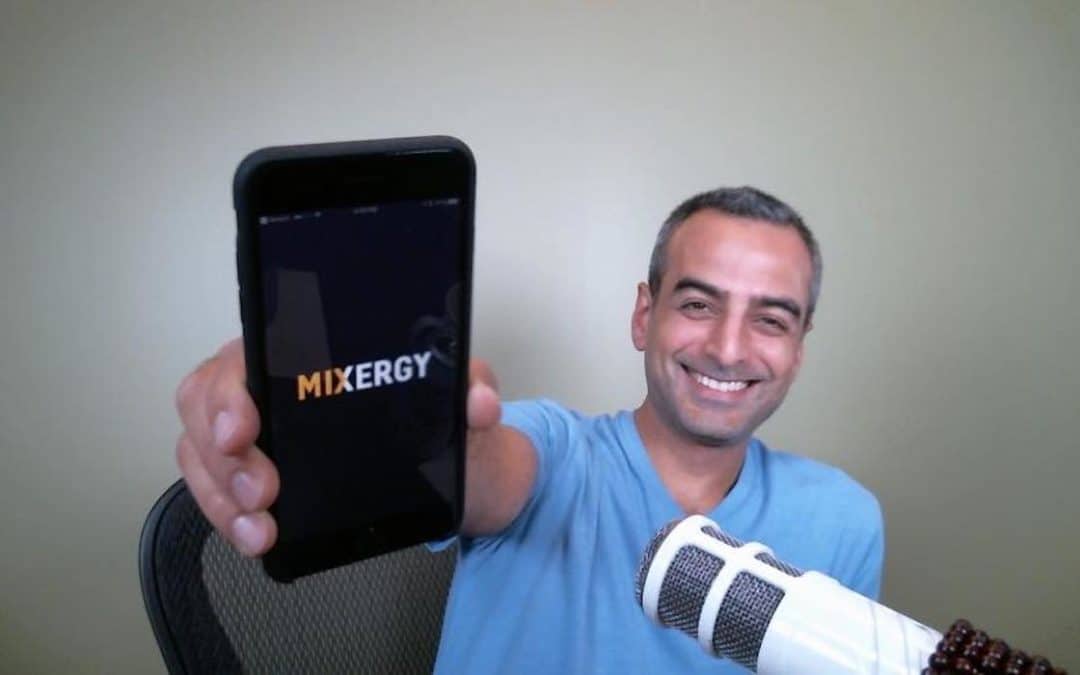
Andrew Warner is passionate about entrepreneurship and loves talking with his fellow entrepreneurs. He came to my attention when he recently interviewed Gideon Shalwick on his current blog, Mixergy, which features tons of great video interviews with leading entrepreneurs.
Andrew has a great story to tell as he, in partnership with his brother, created an eight figure online business (topping $30 million in annual sales at one point), which he later sold. I was naturally curious to learn more about him, what his business was about and what he is currently focused on, so I approached him about doing an interview.
In this interview Andrew explains how he first became an entrepreneur and then dives into a detailed breakdown of how he started and grew his multi-million dollar business and what his current Mixergy project is aiming to achieve.
The concept of leverage is especially important for any company to grow towards eight figures, so I was interested to hear Andrew’s take on how to get real leverage in your business. If you want to push towards a million dollars or more a year from your online business, have a listen to what Andrew had to say.
The Power Of Purposeful Action – Krizia Blogging Case Study
This post is going to seem like a blatant testimonial sales pitch for my Blog Mastermind program, and it is, but I’m publishing this for other reasons as well.
The post just before this one was a guest article by Krizia who blogs at Eat Smart Age Smart. Her article if you haven’t read it already, was a fairly in-depth look at how food, in particular bad eating habits, affects your ability to perform as an entrepreneur. It’s pretty clear after reading the article that Krizia is passionate about healthy eating and she did a great job of creating an article tailored to my audience. You can read the post here -
7 Eating Habits That Sabotage Your Productivity As An Entrepreneur
This is a perfect example of how to really leverage your opportunity when you have a chance to do a guest post on another popular blog or website. Krizia put some real time into her post and gave me (and you) some of her best stuff. She invested real effort – and she did so months ago because it took me more than a month to publish her article. In a sense she gave me some of her best content with “blind faith” hoping that she would reap some rewards and understanding fully that by giving something special she had the best chance of coming out on top.
This is such a rare quality in a blogger, and it’s the reason why Krizia’s trajectory is so good right now with her blogging business.
In a moment I’m going to publish a lengthy report from Krizia where she explains how her blog business has grown during the previous months after she joined my program. Krizia’s outlook is good, and I can confidently say that is entirely because of how much effort she puts in each and every day into her business, on top of the job she still keeps (which hopefully she won’t need for much longer).
It’s sad for me sometimes to accept the realization that many – the majority in fact – of people who join my coaching programs will not get the result they want. I can rest well at night because I know it’s not my fault, I provide the tools and the knowledge to succeed, but only a few people have the energy and commitment to make it work.
This is why I like to celebrate success stories like Krizia’s. Not only does she demonstrate that it’s possible to succeed with a blog and make good money and enjoy all kinds of other benefits thanks to blogging, but she shows what kind of effort it takes across the board. I say across the board because you need to approach your entire blogging strategy with enthusiasm and energy, including what you publish on your blog, what you do to market your blog and in every interaction you have where there is an opportunity to build your blogging business.
This is of course a “life rule” as anything you want success in you must approach with your purest enthusiasm, anything halfhearted will deliver halfhearted outcomes.
Over the past few years I’ve had a lot of people send me guest posts for this blog or just ask to submit them. Generally I say no, though I do like to consider my students as a way of rewarding them for their support. Only the best articles make it live to my site, as is the case with Krizia’s.
I’ve also received a lot of testimonials over the years from my students and general readership thanking me for my work, which is always a wonderful thing. As you will read in a moment though, Krizia went above and beyond with her feedback. She sent me a testimonial that is not only a glowing recommendation for my program, but can actually serve to inspire and teach other bloggers who want to see what a blog can do for you.
It’s because Krizia put in significant effort into both her guest post for me, and her testimonial, that I’m shining a light on her now with this post. It wouldn’t have happened if she didn’t put in so much effort to help me and to help her readers, and thus get rewards in return.
Thanks Krizia, and keep up the good work!
Testimonial for Blog Mastermind
I found out about Yaro’s Blog Mastermind 48 hours before it re-launched in summer of 2008. I found out about the program from my daily surfing of Darren Rowse’s ProBlogger.net site.
I didn’t know who Yaro was, but the sales letter, and more importantly the video testimonials from ordinary people, were compelling enough to get me to sign-up for the program in an attempt to increase traffic, revenue and notoriety to my site with a guy I had never heard about before.
When I joined Blog Mastermind I had been already blogging for one year, but I had made so many “newbie mistakes” and I was trying to process an overload of information from another coaching program I was part of at the time that was quite cumbersome and didn’t provide a clear step-by-step guide, so I really wasn’t seeing much results. Right up to September 2008, I considered quitting working on my first blog because the time and results ratio where out of whack. I’ve decided to hold on to my first site until my new site on nutrition picks up and then I will focus all my attention on the second site and will sell the first one.
I found Yaro’s sales letter to be so devoid of hype and I was hoping that it would translate into the Blog Mastermind program… AND it did!
From the very first lesson, it was clear this program was broken down into such minute parts that it was easy to follow and for someone like myself who had been blogging for one year, it was good to learn where I needed to focus my attention in order to get REAL results.
There are too many “ah-ha” moments in the program for me to list them all, but I can tell you that it didn’t take me long to apply all the new techniques I was learning on a weekly base. I was only able to focus on the course a couple of hours a week, but I took everything I learned and applied it throughout the week to my blog.
When I first started Yaro’s program I was maybe making $200 per month between affiliate sales, Adsense and ads served on my site (I work with a media company for that and I don’t sell the ads directly because it’s a bit trickier for my niche).
I’ll be honest, from the end of July when I started Yaro’s program to the end of November not much happened in terms of revenue, but my traffic and my opt-ins were growing steadily and that gave me confidence.
I was writing about 90% pillar content on my site and I also had a traffic assistant help me with generating more direct traffic to my site. By the end of November my revenues had jumped to about $400 per month. By end of December, my revenues had increased by another couple of hundred dollars and I closed the month with about $600 and I was now getting monthly cheques from Adsense (I’m still not getting huge cheques, but at least I’m getting money every month to help with expenses of running the business).
In January 2009, my revenue increased to $1600 and by February 2009 I surpassed the $2000 mark. I was pretty proud of myself and I was beaming like crazy. I even posted feedback in the member’s forum because my beauty niche is not that easy when it comes to affiliate type products so I thought it might encourage other members.
Nothing prepared me for March 2009 because my revenues spiked to about $5400 for that month and it was such a considerable spike that Account Managers from some of the affiliate companies I was using placed a “courtesy call” to see if I needed their help for anything.
My month of April 2009 was a bit slower compared to March 2009, but it’s one million times better than what I was making in April 2008. May 2009 was an excellent month and it more than double what I made in January 2009!
This is an approximation of my growing income from when I started the Blog Mastermind Coaching program with Yaro:
Are Blog Comments A Trustworthy Source Of Feedback?
I’ve done a lot of online launches – about eight all up if you include closing down and reopening promotions – and each one included heavy support from affiliates, some of whom run popular blogs, including Problogger, John Chow, Shoemoney, Copyblogger and DailyBlogTips.
During a launch, to get a feel for the pulse of how the campaign is going, I spend time reading the comments made to other blogs on the posts relevant to me, my products and the free resources I release.
This is always an interesting process, but it can be very misleading. Most forms of feedback you get online, including comments made to your blog, other blogs, emails you receive and any other discussion points like forums and social media, should be considered very warily.
The problem with this sort of feedback is that it comes from people who rarely represent the majority, yet because they are vocal, what they say does have an impact on the silent majority, those who read the posts and comments but never write a comment of their own.
As the creator of a product feedback is a great thing, but it’s so easy to read a negative comment made about you or what you do on another person’s blog and read into it as indicative of what everybody thinks, which it rarely is. The same goes for positive commentary too, but most people don’t stress about good comments – it’s only the bad ones.
Reputation management is important, but being careful not to involve yourself on an emotional level is important too.
Setting Expectations
The selection of blogs I listed above are very different. The personas behind each blog are different, thus the voice and writing style is different and hence the type of audience they attract is different too.
This is an important consideration, because you have to realize that what is being said on one blog relates to the environment established at that blog from prior blog posts and interactions with that particular blogger. Darren Rowse is different from John Chow, who is different from Brian Clark and Daniel Scocco.
These guys all have followings of people who have come to expect certain actions, types of posts and standards. It’s safe to say that the audience of a blogger generally likes the person behind the blog and shares some, not all, but some of the opinions and viewpoints of that blogger. In other words, they resonate with the person behind the words, hence they read their blog.
This is why, when you head out there and conduct a launch, which is presented in your voice and style, there’s a friction between how you “speak” and how the blogger who writes about you as an affiliate speaks too. The best affiliate is able to use their understanding of their market, and take what you give during a launch and promote your offer so it lines up well with the desires of the audience they have the attention of, using the right language.
Of course there are times when the alignment isn’t there and certain things you do as a marketer are frowned upon by some audiences and not others. This is why you have to be careful when reading comments on other blogs. If your style contradicts the expectations of the vocal minority at that blog, you’re going to hear about it.
State Based Opinions
Another interesting observation I’ve noticed when looking at feedback I receive is how state-based each situation is. This applies to comments made on your blog, or any other blog or any feedback anywhere you get.
How To Work Less and Earn More By Leveraging The Synergy Between People And Technology
Several years ago when I was managing BetterEdit, my proofreading company that I sold in 2007, I was knee deep learning from Rich Schefren, taking his Business Growth System course.
Rich launched that program on the back of his most successful report to date, the Internet Business Manifesto, which featured the now famous flow chart of what an Internet entrepreneur is supposed to do if he or she wants to succeed online. If you haven’t read the Manifesto, I strongly recommend you do so as soon as possible, it’s still one of the most crucial reports on Internet marketing as an entrepreneur ever written.
After reading the Manifesto it was clear I needed to make some changes, so I joined Rich’s coaching program and began going through it. The premise of what Rich teaches is the idea that no person can realistically ever get to the point where their business looks after them, rather than they look after their business, if you do everything by yourself. Rich took this idea a lot further than just outsourcing, and sees business as a machine that can be completely automated.
At that point in time BetterEdit was doing well and I did have Angela, my admin/customer service person looking after most of the day to day emailing for the business, which is the main workload to keep it going. This was great, but as a result of thinking so much about automation and studying Rich’s course, I was interested in possibly using technology to further systematize the operations and gain more leverage.
Using Software To Automate
BetterEdit has a very simple job flow process. A client submits a paper and makes payment, the admin person assigns the job and forwards the document to an editor. The editor completes the job and returns to the document to both the admin and the client. Various emails flow back and forth if there are problems, but generally that’s the basic process.
One of the key weaknesses of the system I had was no affiliate program. I saw huge potential if I could find a way to pay a commission out to websites that referred jobs to the business. Besides manually tracking things, which would be a nightmare, I just couldn’t do it.
The answer to the affiliate issue was to create some kind of software that would handle the job process, including payments, so we could automatically track affiliate referrals and credit commissions for jobs completed.
I had to be careful because between paying editors and admin, the margin on jobs wasn’t massive. This wasn’t like an information product where I could pay out 50% commissions, I’d have to be careful. This was another reason where I saw software as a help as it could reduce the amount of work admin did, meaning I could incentivize affiliates with a higher commission.
With a software system in place, including an affiliate program, I could get out there and recruit an army of websites to refer customers to my business. I liked this idea because by then I was getting pretty tired of heading out to campuses to put up posters to promote the service, although I was starting to outsource this job too (my mind was constantly thinking about how I could work less without reducing my income).
Realizing Your Concept Can Be Tough
It was clear that software could be the automation answer, so I scheduled a meeting with a local development firm and sat down with them to talk about my plan.